We’ve all been there.
You’re finally cleaning out the garage, tackling that overflowing closet, or sorting through years of accumulated belongings when you come across something you haven’t used in forever.
You pick it up, look at it for a moment, and ask yourself:
Do I throw this away? Donate it? Sell it? And can this even be recycled?
Suddenly, what started as a simple cleanup project has turned into a series of decisions about every single item you own.
The good news? Getting rid of unwanted stuff doesn’t have to be complicated. With a little planning, you can clear out your space, keep useful items out of the landfill, and maybe even make a few dollars along the way.
Here’s how to decide what goes where.
1. Donate: Give Useful Items a Second Life
Before throwing something away, ask yourself one simple question:
Could someone else still use this?
If the answer is yes, donating might be your best option.
Clothing, furniture, household goods, toys, books, and sporting equipment are often great candidates for donation, provided they’re clean, safe, and in usable condition.
Here are a few things worth considering:
- Clothing: Gently used clothing, shoes, and accessories may be accepted by local thrift stores or charitable organizations.
- Furniture: Tables, chairs, dressers, and other furniture in good condition may find a new home.
- Household items: Dishes, small appliances, decorations, and kitchen supplies can be useful to someone starting over or furnishing a home.
- Children’s items: Toys, games, and books that your family has outgrown may still have plenty of life left.
Remember that donation centers aren’t disposal facilities. Broken, heavily damaged, or unsafe items generally shouldn’t be dropped off with the expectation that someone else will deal with them.
Before loading up your vehicle, check the organization’s current donation guidelines.
A little consideration goes a long way.
2. Sell: Turn Your Clutter Into Extra Cash
Sometimes the things taking up space in your home are worth more than you realize.
That exercise bike collecting dust?
The extra set of dining chairs?
The power tools you bought for a project and haven’t touched since?
Someone might be willing to pay for them.
Online marketplaces, local community groups, and yard sales can be great ways to sell unwanted belongings.
But there’s a catch.
Selling takes time.
You’ll need to take pictures, create listings, answer questions, coordinate pickups, and occasionally deal with someone asking if you’ll accept $5 for something listed at $100.
To keep your cleanup project moving, set a deadline.
For example, if an item hasn’t sold within two weeks, consider lowering the price or donating it.
Otherwise, your carefully organized “sell” pile might become the next collection of clutter.
3. Recycle: Know What Actually Belongs in the Recycling Bin
Recycling is a great way to reduce waste, but not everything with a recycling symbol can go into your local recycling program.
Different facilities accept different materials, and recycling rules can vary depending on where you live.
Common recyclable materials may include:
- Cardboard and certain paper products
- Aluminum and steel cans
- Some plastic containers
- Certain types of glass
- Scrap metal
However, always check your local recycling provider’s accepted-material list before dropping anything off.
Some items require special recycling programs.
Electronics, rechargeable batteries, appliances, and automotive materials may need to be taken to designated collection facilities.
And remember, placing something in a recycling bin doesn’t automatically mean it can be recycled.
When in doubt, check first.
4. Toss: When an Item Has Reached the End of Its Life
Not everything can—or should—be donated, sold, or recycled.
Sometimes an item is simply worn out, broken beyond reasonable repair, or no longer safe to use.
Damaged furniture, unusable household materials, and certain types of renovation debris may need to be disposed of properly.
But before throwing something away, take a moment to consider whether it requires special handling.
Items such as paint, chemicals, motor oil, batteries, and certain electronics shouldn’t be placed in ordinary household trash or rental dumpsters without confirming the disposal requirements.
Local waste facilities can help you determine the appropriate disposal method.
For larger cleanup projects, a rented dumpster can be a convenient option for approved waste materials.
The important thing is knowing what you’re getting rid of and where it belongs.
5. What About Items You’re Not Sure You Want to Keep?
Ah, yes.
The infamous “I might need this someday” category.
It’s probably responsible for at least half the contents of America’s garages.
If you’re struggling to make a decision, try asking yourself:
- Have I used this in the past year?
- Would I buy this again today?
- Does it serve a practical purpose?
- Am I keeping it because I need it or because I feel guilty getting rid of it?
- Could someone else benefit from having it?
For items you’re still uncertain about, try creating a small, clearly labeled “decide later” box.
Set a date to revisit it.
If you haven’t needed anything inside by then, you may find it easier to let those items go.
Just don’t let the box become a permanent resident of your garage.
6. Make a Plan Before You Start
One of the easiest ways to turn a manageable cleanup project into an overwhelming one is to start pulling everything out without deciding where it will go.
Before you begin, create five designated areas:
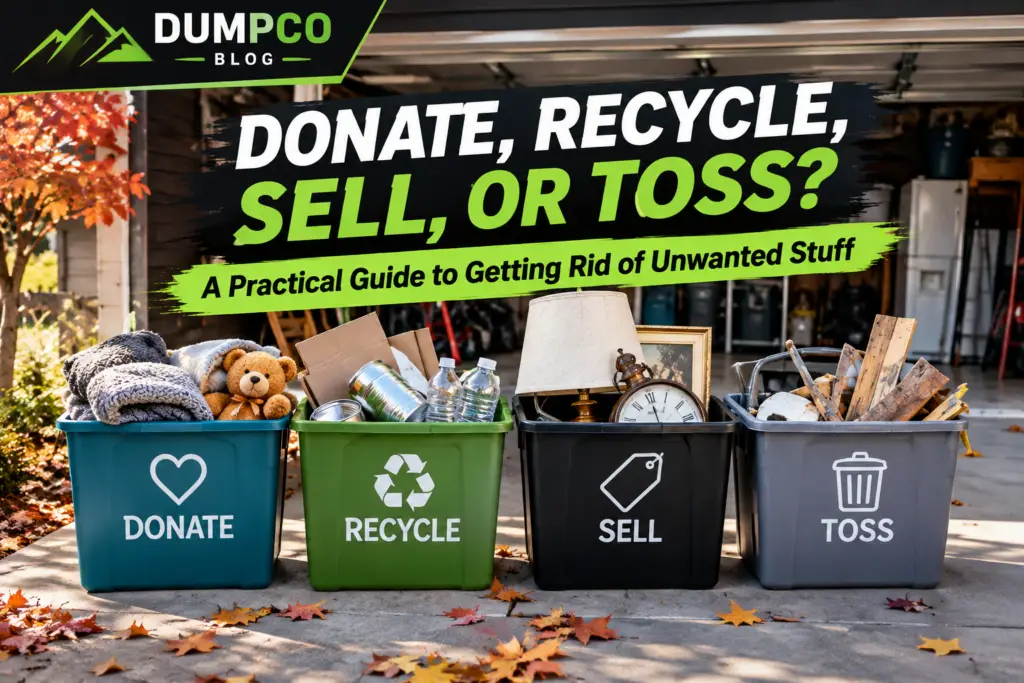
KEEP — DONATE — SELL — RECYCLE — TRASH
As you sort, place each item in its appropriate area.
When you’re finished, make a plan to remove everything you’re not keeping.
Schedule donation drop-offs, arrange sales, locate appropriate recycling facilities, and determine how you’ll dispose of the remaining waste.
For large projects involving bulky items or significant amounts of debris, a dumpster rental may help simplify the disposal process.
The goal is to finish the cleanup—not just relocate the clutter into five new piles.
7. Think Before You Throw
Decluttering isn’t just about making your home look better.
It’s also an opportunity to be more thoughtful about what we consume, what we keep, and what happens to the things we no longer need.
Donating usable belongings helps extend their useful life.
Selling unwanted items gives someone else the opportunity to use them.
Recycling appropriate materials can help conserve resources.
And disposing of waste responsibly helps protect our community and environment.
You don’t have to make every decision perfectly.
Even small efforts to reduce unnecessary waste can make a difference.
A Cleaner Home and a More Thoughtful Cleanup
Whether you’re clearing out a closet, organizing your garage, preparing for a move, or tackling a larger home project, knowing what to do with unwanted belongings can make the entire process easier.
Start by keeping what you use, finding new homes for what still has value, recycling what you can, and properly disposing of what’s left.
And if your project produces more waste than your regular trash service can handle, Dumpco is here to help Southern Utah homeowners manage larger cleanups.
Because a successful cleanup isn’t just about getting rid of stuff. It’s about making smart decisions about where that stuff goes next.